
Championing Sustainable Growth from the Boardroom: Stanford Doerr School of Sustainability and Egon Zehnder
Dr. Min Zhou reflects on signals, systems thinking, board stewardship and the leadership required to turn sustainability into durable business value.

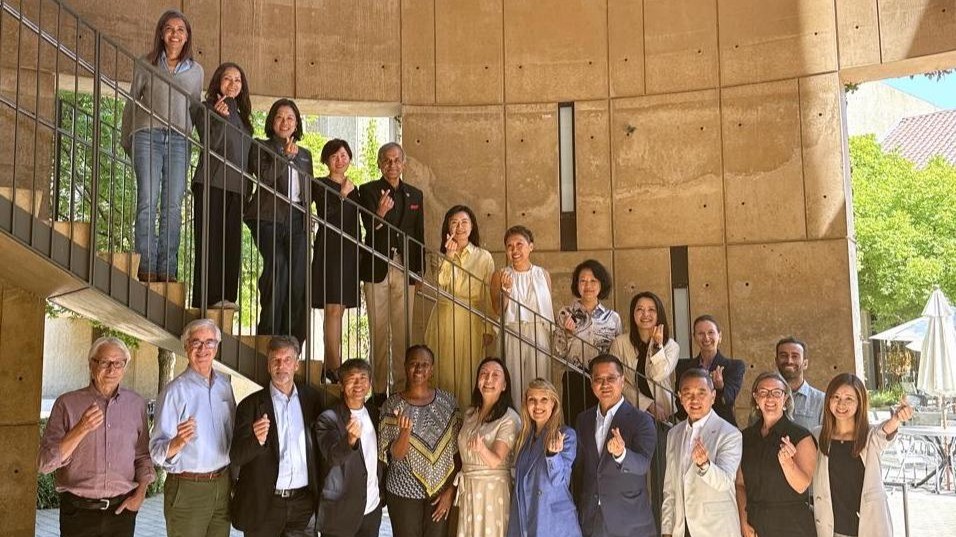
From July 7th to 11, CM Venture Managing Partner Dr. Min Zhou participated in a vibrant gathering of global directors and investors at Stanford University for “Championing Sustainable Growth from the Boardroom,” a collaborative effort between the Stanford Doerr School of Sustainability and Egon Zehnder. In a time defined by climate upheaval, geopolitical turbulence, and swift technological advancements, the dialogues were rich, candid, urgent, and imbued with a sense of hope.
Over four and a half days, attendees engaged in numerous lectures and conversations with prominent leaders including ex-Secretary of State Condoleezza Rice, ex-Clorox Chairman Benno Dorer, well-known Stanford professor Dr Yi Cui. The cohort also had thought-provoking exercises, and ample moments of introspection focused on pivotal themes:
It was an inspiring week. Min left with a single resonant thought: to be a keen detector of signals, to design organizations thoughtfully, to foster authentic alignment with stakeholders, and to continually expand one’s identity by embodying the future self you aspire to become.
What’s unfolding in sustainability?
- Its focus has shifted—from morality to materiality.
- Success means consumers, businesses, and the planet all win—not just as ideals but as concrete outcomes.
- Sustainability: leadership persists, laggards fade away. It becomes deeply embedded in business, more integrated and strategic.
What should companies do?
- First, distinguish signals from noise.
- Second, anchor on what remains constant.
- Third, differentiate industry risk from enterprise risk, always seeking opportunity.
- Develop a long-term vision that guides strategy, shapes plan, fosters culture, and builds capabilities—engaging stakeholders to ultimately enhance shareholder value.
- Adopt systems thinking - view human capital, social capital, knowledge capital, natural resources, and manufacturing infrastructure as interconnected elements.
What makes for an effective board?
- The evolutionary progress of a board stewardship from utilization, integration to transformation.
- Leverage collective wisdom: board members are often generalists, each with a unique edge.
- Promote dissent—not just consensus—align through dialogue, not conformity. Talk it, lock it, walk it.
- Avoid micromanagement—trust your management team.
- Bring in external perspectives via independent directors.
- Invite external speakers to introduce diverse opinions and insights.
Leadership:
- Real leadership is about designing resilient institutions—top-down, strategic, purpose-driven.
- Foster psychological safety.
- Leaders must show vulnerability; it builds trust, which is essential for shaping meaningful context.
- Justice and fairness are fundamental—deeply rooted in human psychology and morality.
- The five Ps reflect what a company truly values: priorities, performance metrics, pay, promotions, and power.
Individual Growth:
- Become an antenna for signals.
- Achieve alignment across physical, mental, spiritual, and emotional dimensions — many leaders excel in thinking and doing but overlook the emotional and spiritual.
- Progression flows from knowledge to skills, forming identity, then traits and motives—such as achievement or power—which are the hardest to develop.
- Identity is the story I tell myself about who I am.
- Modeling an aspirational identity is a powerful tool for development.